

COMILLAS SUCCESSFULLY CONCLUDES THE COURSES OF THE CHAIR OF GASTRONOMY, INNOVATION AND CULINARY SUSTAINABILITY
2025/12/16
The Comillas University Chair of Gastronomy, Innovation, and Culinary Sustainability has celebrated the closing of its first training programs, “ Numbers in the Kitchen ” and “ Innovation and Business Management for the Future in the Gastronomic Sector .” These courses, offered in collaboration with the Madrid City Council and the Madrid Culinary Campus (MACC) , were aimed at both job seekers and professionals in the gastronomic sector who wish to enhance their skills and adapt to an increasingly competitive and constantly evolving environment.
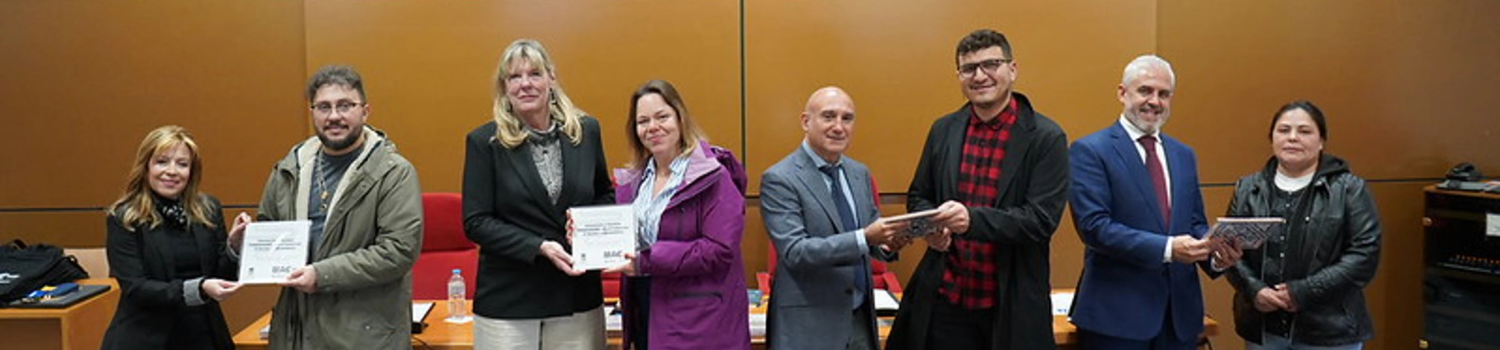
The closing event, held as part of these initiatives, was presided over by Antonio Obregón , Executive Director of the MACC . Representatives from the Madrid City Council and the Employment Agency also attended the ceremony. Among them was Olga Ruiz Castillo , Director General of Commerce and Hospitality , who emphasized the importance of these training initiatives as a tool to "empower unemployed people by providing them with excellent training." In her remarks, Ruiz Castillo also underscored the crucial role of gastronomy as a sector that " is managed, innovates, and is projected toward a more sustainable future ."
In addition, Virtudes Laguna de Amo , director of the School of Hospitality and Food , expressed her gratitude to the students for their effort and celebrated that the successful experience of this first edition opens the door to new collaborations that can expand access to training accredited by Comillas.
For his part, Manuel Morales Contreras , director of the Chair , highlighted the students' engagement throughout the courses and announced that the Chair is already working on research projects on business management in the gastronomic sector. " Congratulations to those of you graduating today; we hope to have you with us in future initiatives ," Morales said.
The closing ceremony not only marked the end of this edition but also represented the beginning of new opportunities for the participants, who now have access to specialized training to shape their professional futures. The courses, which have been a success for both the unemployed and industry professionals, are a clear example of how gastronomy continues to evolve and adapt to the demands of a market increasingly focused on innovation and sustainability.